TANK MONITORING COMPARED
Manual Dipping vs Automatic Tank Gauge: Which Should Your Network Use?
A dipstick tells you what was in the tank when someone last checked. An automatic tank gauge tells you what’s there now, and Head Office puts it in front of you.
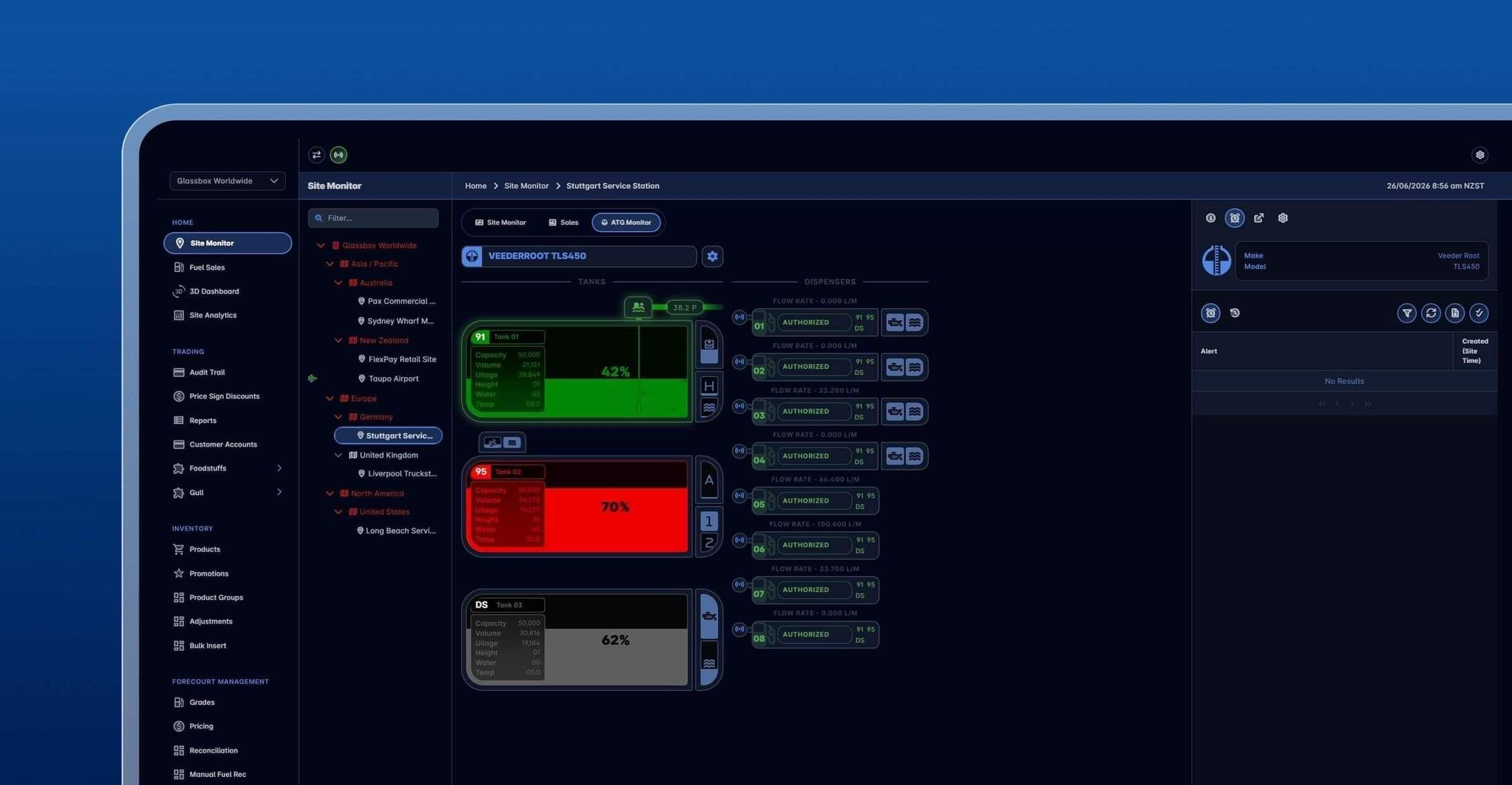
Manual dipping measures a fuel tank by hand, usually once a day, with a dipstick and a tank chart. An automatic tank gauge (ATG) is a probe that measures every tank continuously and reports level, water and temperature on its own. For one staffed site, a careful daily dip can do the job. Across a network, and on any unmanned site, an ATG connected to Glassbox's Head Office is what keeps stock, deliveries and sales reconciled every day.
What is the difference between manual dipping and an automatic tank gauge?
A dip is one reading taken by a person, while an automatic tank gauge reads the tank all day, every day. With manual dipping, someone lowers a graduated stick into the tank, reads the wet mark, and converts that height into litres using the tank's chart, with a separate check for water at the bottom. The answer is only as good as the person, the stick and the chart, and it describes one moment. An ATG probe sits in the tank permanently and reports product height, volume, ullage, water level and temperature as they change. Glassbox reads those gauges straight into Head Office, so the same numbers sit on one screen beside the pumps, terminals and price signs, without anyone walking out to the tank.
Where does manual dipping go wrong?
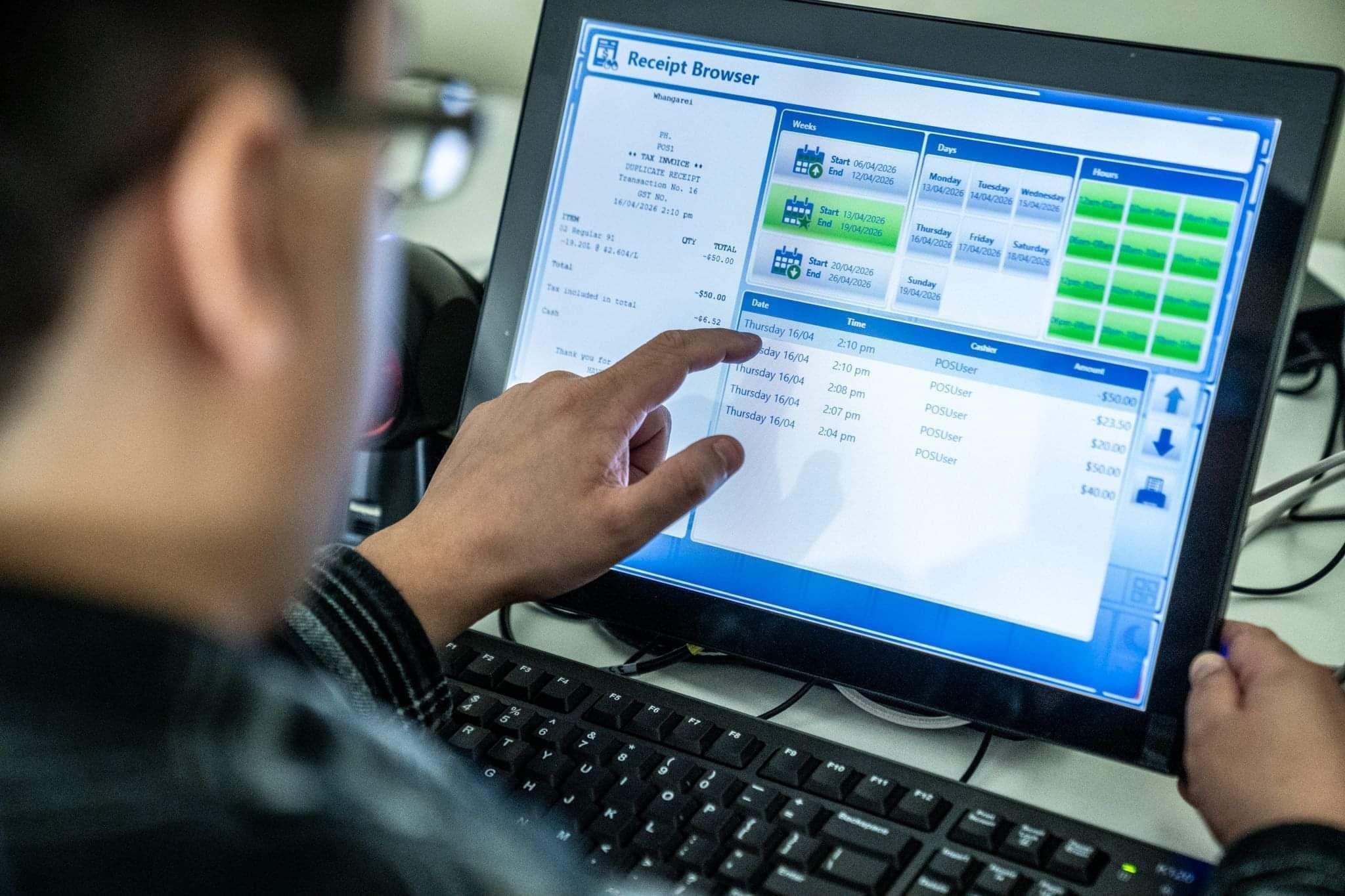
Manual dips go wrong in the reading, the timing and the paperwork. A stick read a few millimetres out, a dip taken while a delivery is still settling or a pump is running, or the wrong tank chart for that tank, and the litres are off before anyone has done any maths. Then the number has to be written down and keyed into a spreadsheet next to sales and delivery dockets. That's the picture Glassbox hears from finance teams at month end: deliveries, dips, sales and account pricing across many sites that never quite line up, and a month-end that stretches into days because every gap has to be chased by hand. A dip can't tell you what happened between readings either, so a slow loss or a short delivery hides until the next count.
When is it time to move from manual dipping to an automatic tank gauge?
It's time once you run more than one site, run any site without staff, or spend days each month reconciling fuel. On an unmanned site nobody is there to dip at all, so the operations manager can't see a low tank or a water problem until a customer calls or someone drives out. An automatic tank gauge connected to software closes that gap, because an alarm reaches the right person the moment it happens. One Glassbox customer running a mostly unmanned network said the technology has given them "a lot more real-time access to our fuel sites". If your team is driving between sites to read tanks, an ATG is the tank dipping alternative that pays for that time back.
How do manual dipping and an ATG compare?
Here is how the two stack up on the jobs that matter on a forecourt:
Readings: a manual dip gives one reading per tank per visit; an automatic tank gauge reports continuously.
Water: a dip needs a separate water check; an ATG reports the water level with every reading.
Alarms: a dip raises no alarm between visits; an ATG can trigger low product, high water and sudden loss alerts.
Reconciliation: dip figures are typed in by hand; ATG readings can feed reconciliation automatically.
Unmanned sites: dipping needs someone on site; an ATG doesn't.
Time: dipping costs a visit to every tank; an ATG needs no visit once it's connected.
What does an automatic tank gauge change in fuel reconciliation?
It fills in the physical side of the sum automatically, so reconciliation can run every day instead of once a month. Wetstock reconciliation compares what the books say should be in the tank with what's really there. With manual dipping, the "really there" side waits for the next dip. With an ATG, Glassbox lines up the gauge reading against pump sales and deliveries for every tank, every day, and flags any variance outside your tolerance, which is what automated fuel inventory looks like in practice. When the situation calls for it, you can still enter a delivery by hand or run a manual reconciliation for one tank or one period, and every movement keeps its audit trail.
What to check before you stop dipping by hand
Does the software read the tank gauge brand already in your tanks, or does it want new hardware?
Do the gauge readings feed reconciliation on their own, or does someone still export them?
Who gets the alarm when a tank runs low or shows water, and can they act on it from their phone?
How will you cross-check the gauge against an occasional manual dip, and who owns that job?
Is setup a VPN and an IT project, or something that goes live remotely in days?
See your own tanks on the dashboard
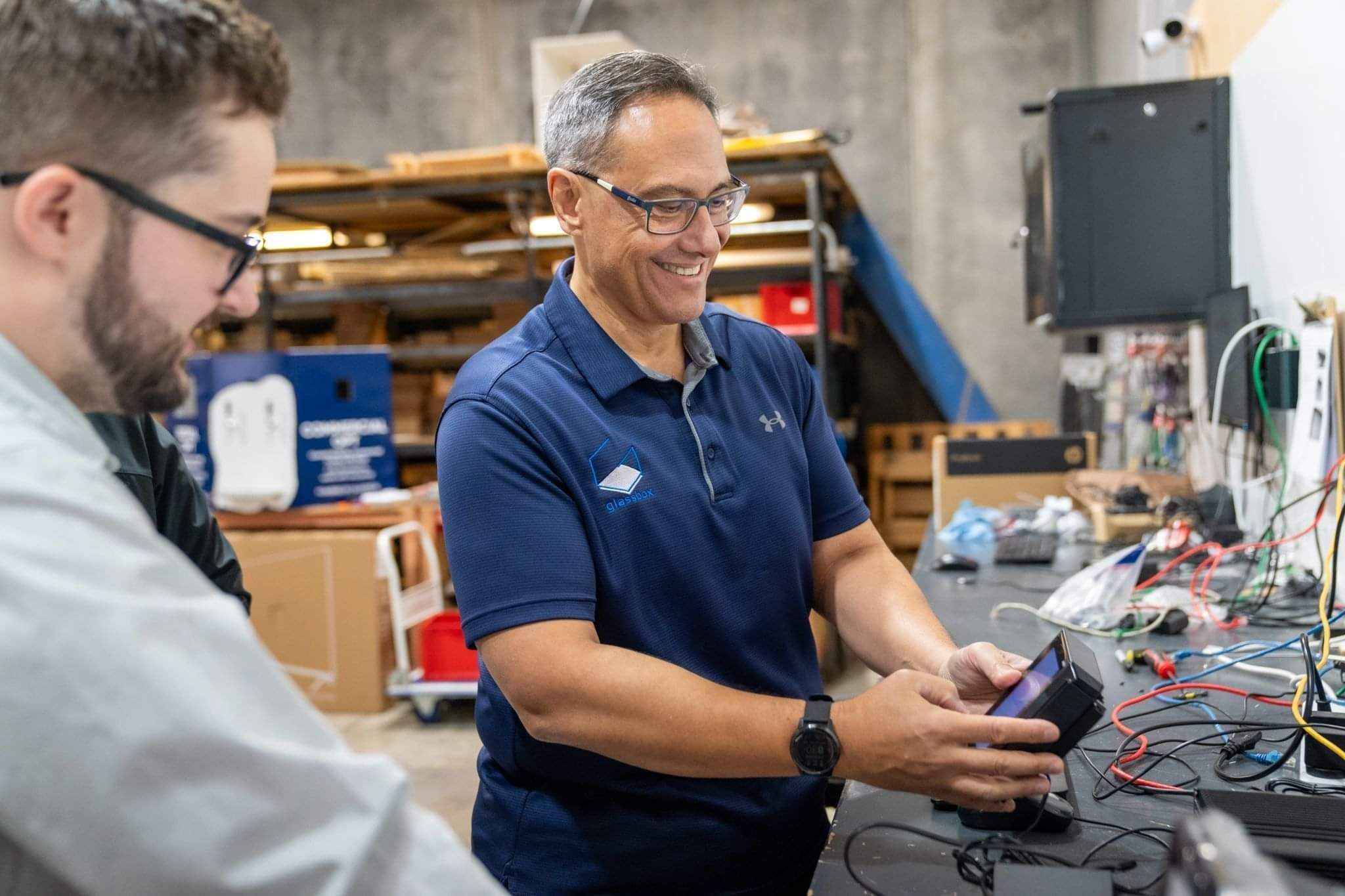
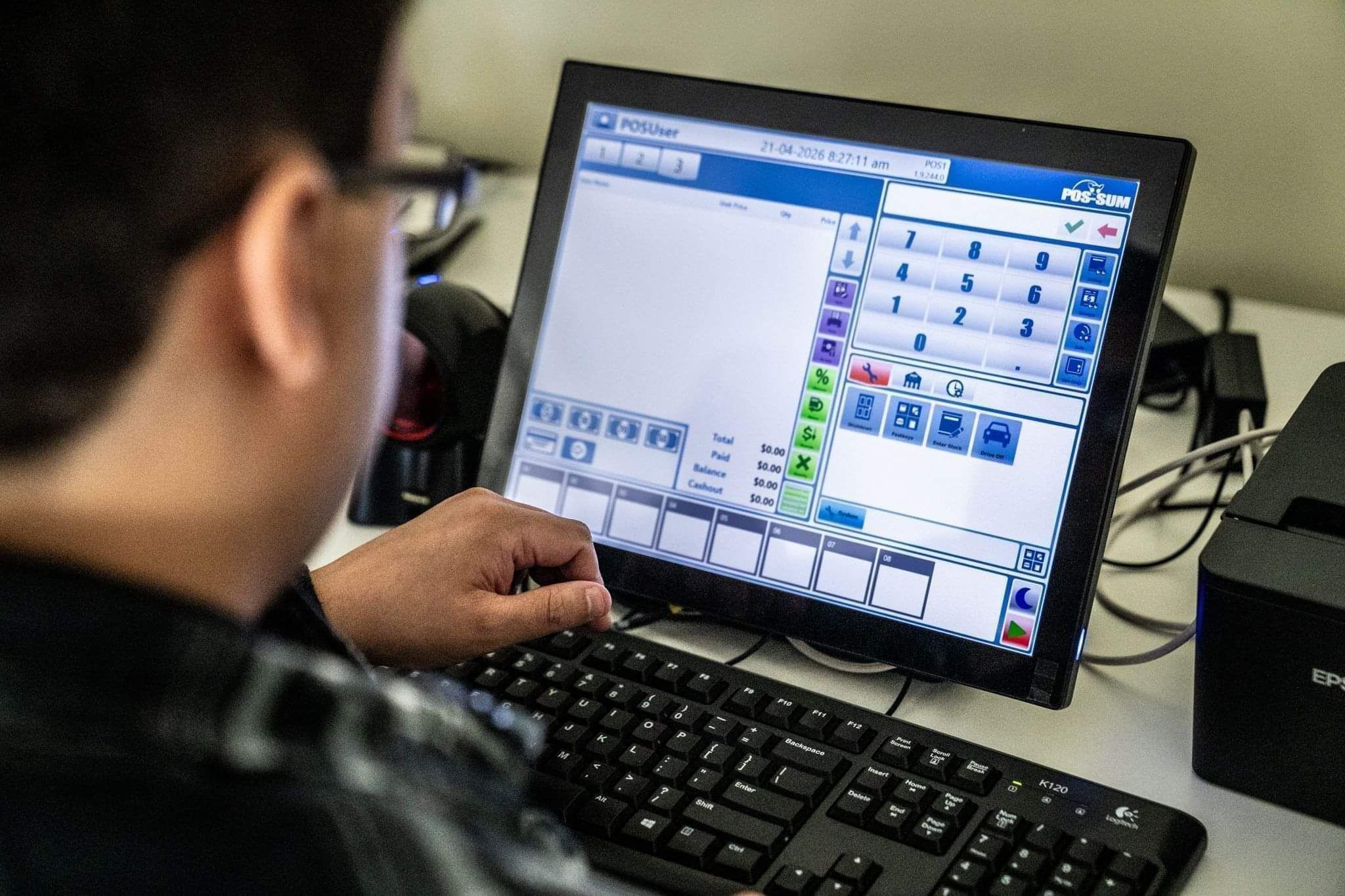
If you're still dipping by hand, the easiest way to see the difference is on your own site. Glassbox sends a pre-configured PC that plugs into the site network, connects to the automatic tank gauges already there, and puts every tank on the dashboard within minutes. Keep it for 30 days with no obligation.
LIVE IN MINUTES
Book a free 30-day trial
Book a demo, or ask for the trial box and watch your site appear within minutes of plugging it in.
FAQs
Do I still need to dip my tanks if I have an automatic tank gauge?
Day to day, no. The gauge takes the readings a person used to take by hand, and it takes them all day rather than once. It still makes sense to keep an occasional manual dip as a cross-check that the gauge and the tank chart agree, the same way you'd check any measuring device now and then. What changes is the job the dip does. It stops being the number your reconciliation depends on and becomes a check on the system that does. With the gauge connected to Glassbox, the live readings sit next to sales and deliveries in Head Office, so if a gauge reading starts drifting away from what the sales and deliveries say should be in the tank, it shows up as a variance you can see, rather than something a person has to spot on a dipstick.
Can Glassbox help a site that still dips by hand?
Yes, and the gauges are the place to start. If a site already has an automatic tank gauge in the ground, Glassbox reads the major brands, including Veeder-Root and Franklin Fueling, so the first step is connecting what's there. Reconciliation in Head Office runs automatically by default, and when the situation calls for it you can enter a delivery by hand, adjust for a known event or run a manual reconciliation for a specific tank or period. Every sale, delivery and tank movement keeps its audit trail. If a site has no gauge at all, talk to the team about the hardware on that site, because the right answer depends on what's there.
What if our sites have different tank gauge brands?
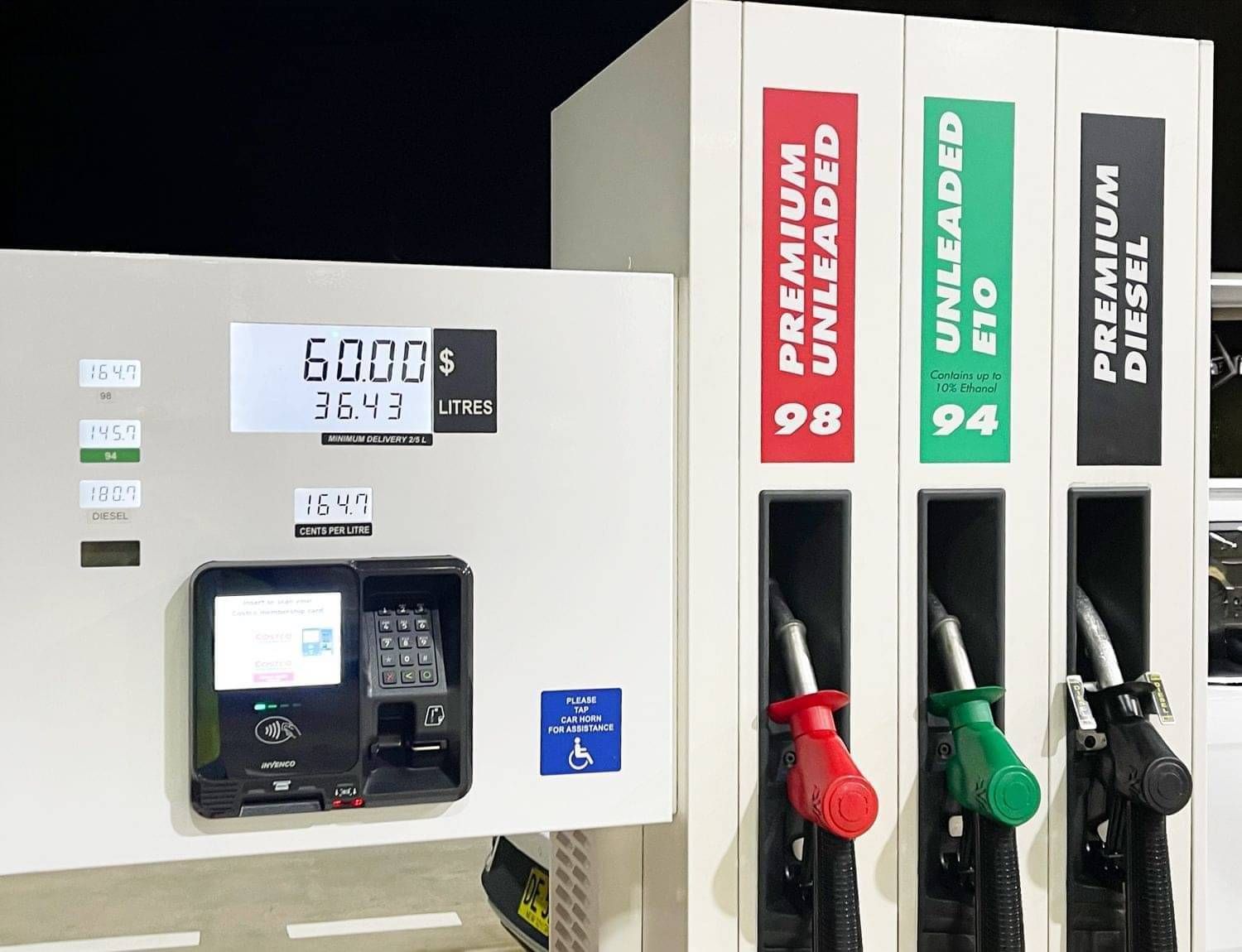
That's common on networks built through growth or acquisition, where one site runs Veeder-Root probes, another runs Franklin Fueling, and the pump controllers and terminals differ again. Software tied to one vendor can't span that, which is how operators end up with a console per brand and a spreadsheet to join them. Glassbox is hardware agnostic: it integrates directly with the tank gauges, pump controllers, payment terminals and price boards already on each site, including Gilbarco, Invenco, Veeder-Root, Franklin Fueling, PAX and POSTEC, so every tank on every site reads into one view. If you change gauge vendors later, Glassbox keeps running, and moving a site from manual dipping to an ATG doesn't mean changing software.
How quickly can we see live tank readings in Glassbox?
Usually within minutes of plugging in the trial box. Glassbox sends a pre-configured PC that connects to the site network over secure HTTPS straight out of the box, so there's no VPN to set up and no network re-engineering. Once it's plugged in, the forecourt appears on the dashboard with its tanks, pumps and terminals, and you can watch the tank readings update while you compare them with the last manual dip. A full rollout is set up remotely in a matter of days, and each site is set up in Head Office before anything is installed. You can keep the trial box for 30 days with no obligation, which is long enough to see how the readings line up against your own deliveries and sales.
Is an automatic tank gauge worth it on an unmanned site?
That's where it matters most. On a staffed site someone might notice a tank running low or a pump that's stopped, but on an unmanned site nobody is there to dip the tanks or see a fault. An operations manager running unmanned sites needs alerts that find them before problems find their customers, plus the ability to act remotely so a fault doesn't always mean a drive out. Glassbox puts the automatic tank gauge readings and alarms in Head Office next to the pumps and terminals, and lets you restart terminals and pumps remotely. That way a tank alarm on a remote site reaches you as fast as one down the road.
Veeder-Root, Franklin Fueling, Gilbarco, Invenco, PAX and POSTEC are trademarks of their respective owners. Glassbox is an independent software platform.
Didn't find your answer?
Ask us directly. We're happy to talk through anything specific to your network, or just book a demo and see it for yourself.

CONTACT US


